How to Start CBD Dosing Without Overdoing It
CBD is easy to find these days—in pharmacies, grocery stores and online—but figuring out how much to take is less straightforward. There is no single beginner dose that suits everyone, and a product’s label is not a substitute for medical advice. If you’re considering CBD, a practical approach is to check the product carefully, start with a small amount and make changes gradually.
That’s the idea behind “start low, go slow”: begin with a low dose, give it time, and keep notes before deciding whether to adjust. This guide explains how to use that approach, what to know about CBD product types, and why “THC-free” claims deserve a closer look—especially if you may be tested for drugs.

First, what does a CBD dose mean?
CBD, short for cannabidiol, is a compound found in cannabis plants. It is not the same as THC, the intoxicating compound that can cause a “high.” CBD products are sold in forms such as oils, capsules, gummies and creams. The amount of CBD in a serving can vary considerably from one product to another.
A dose is the amount of CBD you take at one time, usually measured in milligrams (mg). For oils, the label may list the total CBD in the bottle as well as the amount in a serving. Those are different numbers. For example, a bottle containing 1,000 mg of CBD does not mean that one dropper contains 1,000 mg. Check the serving size and the concentration before measuring.
CBD is not an FDA-approved treatment for most conditions. The FDA has approved a prescription CBD medicine for certain seizure disorders, but that is not the same as approving over-the-counter CBD products for general use. Research is ongoing, and product quality and individual responses vary.
How to start low, go slow with CBD
There is no universally established beginner CBD dose. A person’s response can depend on the product, how it is taken, other medicines, body chemistry and the reason for use. Rather than treating an online dose chart as a prescription, use these steps as a cautious way to organize a conversation with a health professional and track what happens.
- Check with a clinician or pharmacist. This matters especially if you take prescription or over-the-counter medicines, have a medical condition, are pregnant or breastfeeding, or are considering CBD for a child. CBD can affect how some medicines are processed. A pharmacist can help review potential interactions.
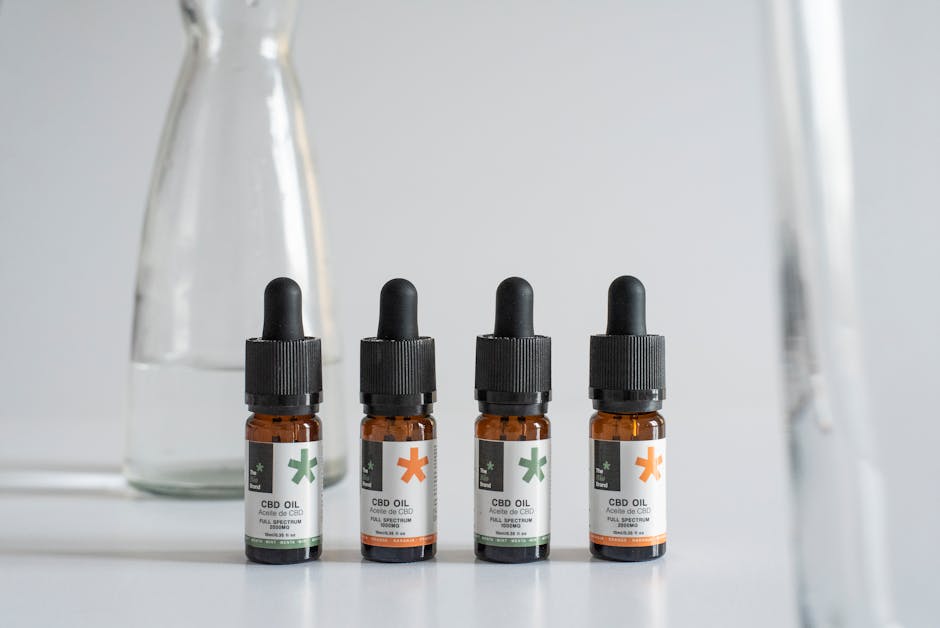
- Choose one product and read its label. Look for the amount of CBD per serving, the serving size, directions and a batch-specific certificate of analysis (COA). Avoid starting several new supplements at once; that makes it harder to tell what caused a change or side effect.
- Begin with a small labeled serving. There is no official starting amount for general CBD use. If you and your clinician decide to try it, start at the low end of the product’s labeled directions rather than taking a large amount to chase a quick result.
- Keep the dose steady at first. Take it at a consistent time and in a consistent way. Note the product, amount, time and any effects or side effects. Follow the label’s instructions, and ask a professional how long to wait before considering a change.
- Adjust gradually, if appropriate. If you and your clinician decide to increase the amount, make one small change at a time. This gradual process is called CBD titration: adjusting the dose in measured steps while watching for effects. Do not increase repeatedly in a short period because you did not notice an immediate effect.
- Stop and seek advice if you feel unwell. Report concerning symptoms to a health professional. Do not drive or operate machinery if you feel sleepy, dizzy or otherwise impaired.
The phrase “start low go slow CBD” is a useful reminder, not a guarantee of safety. Even a modest amount can cause unwanted effects or interact with medicines. Commonly reported effects include sleepiness, diarrhea, changes in appetite and fatigue. The FDA also warns that CBD may affect the liver and interact with other drugs.
Allow for differences between product types
“CBD” on the front of a package does not tell you everything that is in the product. The extract type can affect whether the product may contain other cannabis compounds, including THC.
Product type What it generally contains What to keep in mind Full-spectrum CBD and other naturally occurring hemp compounds; it may contain THC within applicable legal limits. It is not the cautious choice for someone seeking to avoid THC exposure. Confirm the amount on the batch report. Broad-spectrum CBD and some other hemp compounds, with THC intended to be removed. “THC-free” is a claim to verify, not assume. Check the current batch COA and its testing limits. CBD isolate CBD separated from most other cannabis compounds. It is often marketed as THC-free, but the finished product still needs testing to support that claim.Full-spectrum, broad-spectrum and isolate are product descriptions, not guarantees of quality or effectiveness. The exact contents depend on the manufacturer’s process and the finished product’s testing. Read the report for the specific lot you are buying, not just a general document from the brand.
The entourage effect, in plain language
The “entourage effect” is a proposed idea that cannabis compounds may influence one another when they are present together. In plain language, it suggests that a mix of plant compounds might behave differently from CBD by itself. It is a research concept, not proof that full-spectrum products work better for a particular person. A seller’s use of the phrase does not establish a health benefit.
THC-free claims and drug testing risk
Interest in THC-free CBD is understandable. People may want to avoid intoxication, comply with workplace rules or reduce the chance of a positive drug test. But no over-the-counter label can promise that a person will pass a drug test.
Many drug tests look for THC or its metabolites, not CBD. Full-spectrum products may contain THC, and a product labeled broad-spectrum or isolate could still have trace THC because of manufacturing or testing limitations. Repeated use, product composition, the amount taken and the type of test can all matter. Do not treat “hemp-derived,” “non-intoxicating” or “THC-free” as proof of zero risk.
If a drug test could affect your job, license, legal status or another important matter, the most cautious option is to avoid CBD products that may expose you to THC—and to discuss the risk with the testing program or a qualified professional. A COA can help you assess a product, but it cannot guarantee a test outcome.
How to read a batch-specific COA
A certificate of analysis, or COA, is a lab report showing results for a tested sample. Batch-specific means the report identifies the same production lot as the product in your hand. It should be accessible by a QR code, product page or other clear method. A generic report, an old report or a report for a different lot is not enough to confirm what is in your bottle.
- Match the lot number. Check that the number on the package matches the number on the report.
- Check the testing date. A recent report is more useful than one from a previous production run.
- Compare CBD amounts. Look for cannabinoid results and compare them with the label’s stated CBD content. Units and serving calculations can be confusing, so ask the company to explain them if needed.
- Look for THC results. Check which forms of THC were tested and the reported amount. “Not detected” means the lab did not detect it above its method’s limit; it does not necessarily mean absolute zero.
- Review contaminant testing. A useful report may include tests for pesticides, heavy metals, solvents and microbes. A cannabinoid-only report does not address those issues.
- Identify the lab. The report should name the laboratory and give enough detail to understand the methods and results. If the report is hard to find or the lot does not match, choose another product.
Third-party testing is useful, but it is not magic. A report covers the sample tested, not every bottle in every future batch. It also does not prove that CBD is effective for a health condition.
Why lab testing and refinement steps matter
Ever notice how hemp extracts typically go through several stages between the plant and the finished product. Processes may include extraction, filtration or other cleanup, and refinement to make an extract with a particular cannabinoid profile. Manufacturers then formulate the extract into a product such as an oil or capsule. The specific steps vary by company and product.
Each step can affect what remains in the extract. Extraction and refinement may remove some unwanted substances, but the process itself is not proof that the finished product is free from contaminants or contains the amount of CBD stated on the label. That is why independent testing of the finished batch matters. Ask brands how they test raw ingredients and finished products, and whether results cover cannabinoids as well as contaminants.
Be wary of broad claims like “pharmaceutical grade” or “pure” if the brand does not explain what those terms mean and provide supporting documentation. Clear sourcing information and accessible, batch-specific reports are more useful than polished packaging.
Buying basics—and the missing-price problem
If you are comparing products, look at the amount of CBD per serving, serving count, extract type, testing access and the price. A common problem in scraped articles and product roundups is that product prices are missing. That leaves readers unable to compare options fairly. Prices change by retailer, size and promotion, so it is better to check the current listing than to rely on an undated figure.
When comparing cost, consider the price per milligram of CBD as one practical measure—but do not let a low cost per milligram outweigh unclear testing or a missing batch report. Also check whether the listed amount refers to the whole package or one serving. If the price is not provided, treat that as missing information, not evidence that the product is a bargain.
A simple CBD tracking checklist
A small log can make a cautious trial easier to discuss with a clinician. Record:
- Product name, type and lot number.
- The batch COA link or QR code and testing date.
- CBD amount taken, serving size and time of day.
- Other medicines or supplements taken around the same time.
- Any changes you notice, including unwanted effects.
- Questions to take to a pharmacist or clinician before changing the amount.
The bottom line
For a beginner, the safest starting point is not a universal number—it is a careful process. Talk with a clinician or pharmacist, choose a clearly labeled product, verify its batch-specific COA and begin with a small amount only if a professional agrees it is appropriate. Exactly.. Give changes time, track what happens and make any dose adjustments gradually.
Remember that full-spectrum products may can full-spectrum fail drug test contain THC, while broad-spectrum and isolate products still need finished-batch testing to support THC-free claims. If drug testing matters to you, no label or COA can guarantee a negative result. “Start low, go slow” is a sensible way to approach CBD, but it is not a substitute for medical guidance or trustworthy product information.